Why Wisconsin Weather Is So Tough on Patios
SE Wisconsin sees average winter lows in the single digits and annual freeze-thaw cycles that can number in the hundreds. Water seeps into porous surfaces, freezes, expands, and breaks the material apart from within. This process — called frost heave — is the number one cause of patio failure in our region.
A patio that looks beautiful in May can look cracked and uneven by October if it wasn't installed or built for our climate. Material selection matters. So does the base preparation underneath.
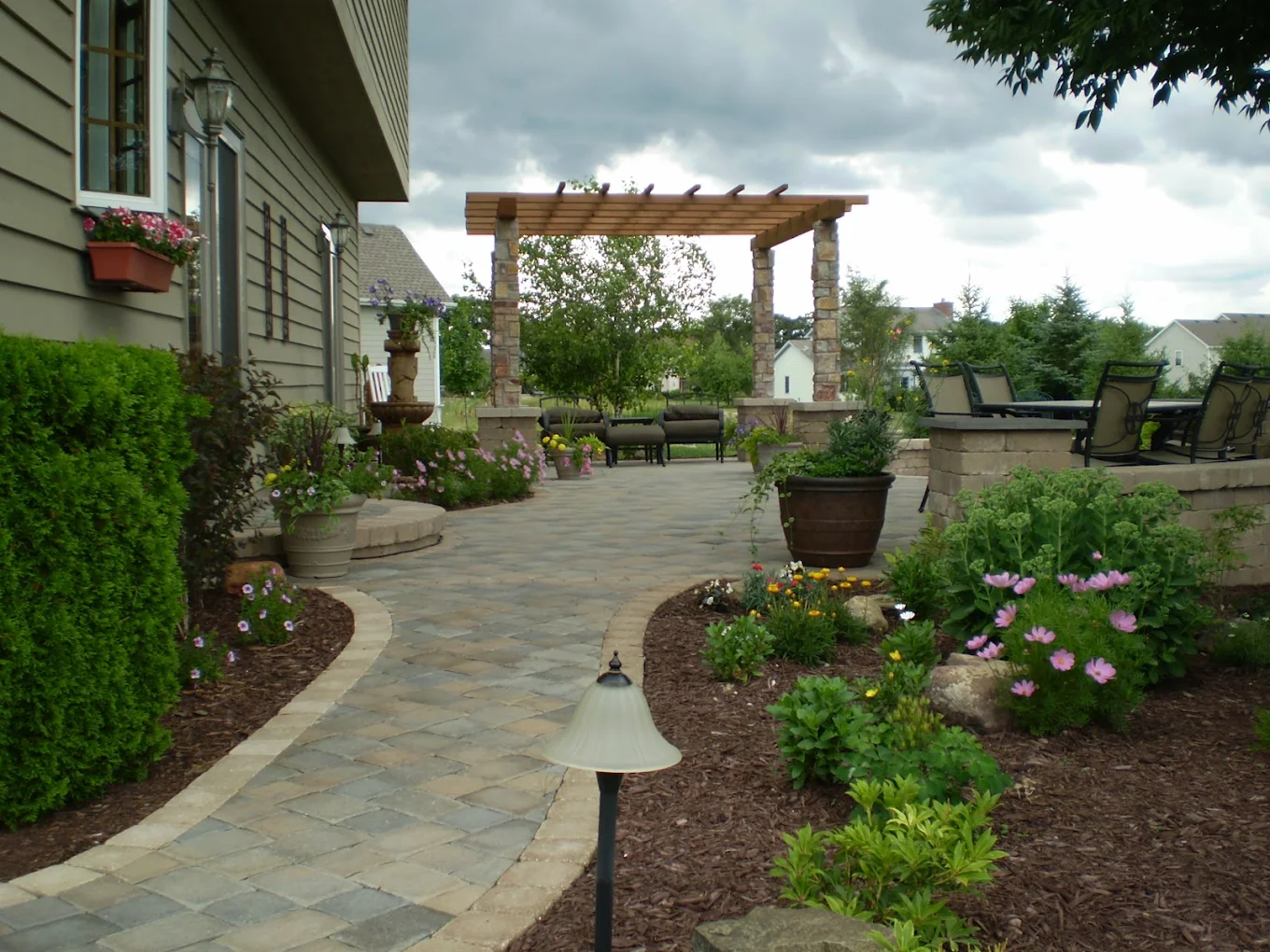
Concrete Pavers: Our Top Recommendation
For most SE Wisconsin homeowners, concrete pavers are the best all-around choice. Here's why:
- Individual units flex independently — unlike poured concrete, pavers can shift slightly during freeze-thaw cycles without cracking the entire surface
- Repairability: A damaged paver is replaced individually; a cracked concrete slab requires patching or full replacement
- Durability: Quality pavers are rated for 50+ years with proper installation
- Design variety: Available in dozens of colors, textures, and patterns
- Cost range: $15–$30 per square foot installed depending on style and complexity
The key to long-lasting pavers in Wisconsin is the base: a properly compacted gravel base (typically 6–8 inches) with a bedding sand layer allows for drainage and minor movement without disrupting the surface.
Natural Stone: Premium Aesthetics, More Considerations
Bluestone, limestone, and granite are gorgeous — and they can absolutely work in Wisconsin. But they require more care:
- Porous varieties absorb water and can spall or flake in freeze-thaw cycles without proper sealing
- Annual sealing is required for most natural stone to maintain appearance and structural integrity
- Higher upfront cost: $25–$45 per square foot installed
- Thermal mass: Stone can be slippery when wet or icy — a consideration for steps and walkways
If aesthetics are your priority and you're willing to maintain it, natural stone is a stunning choice. We install bluestone patios and natural stone steps throughout SE Wisconsin with great results.
Composite / Porcelain Tile: The Modern Option
Porcelain pavers have grown significantly in popularity over the last several years — and for good reason:
- Near-zero water absorption makes them excellent for Wisconsin winters
- Fade-resistant and maintain color longer than some concrete pavers
- Textured options are slip-resistant even when wet
- Cost range: $20–$40 per square foot installed
The main trade-off: porcelain can crack under heavy impact (a dropped shovel edge, heavy furniture dragged across the surface) and individual pieces are more difficult to match and replace years later.
Poured Concrete: Budget-Friendly with Caveats
Concrete is still a solid option when installed correctly — but Wisconsin winters expose every weakness:
- Cracks are when, not if: Even well-installed slabs develop cracks within 5–10 years in our climate
- Salt damage: Deicing salts accelerate surface deterioration; use sand instead
- Sealing is essential: Seal every 2–3 years to slow water infiltration
- Lowest upfront cost: $10–$18 per square foot installed
- Stamped concrete looks great initially but requires more maintenance to keep looking sharp
Concrete works best for utilitarian applications — garage aprons, utility pads — where appearance is secondary. For a patio you'll use and see daily, we generally recommend pavers instead.
Common Mistakes Homeowners Make
After years of working across SE Wisconsin, we see the same mistakes repeatedly:
- Skimping on the base: A beautiful paver surface installed on a 2-inch base will heave and shift within a few seasons. Proper base depth is 6–8+ inches of compacted gravel.
- Choosing the wrong grade of paver: Decorative concrete pavers sold at big-box stores are often not rated for vehicular traffic or Wisconsin winters. Specify commercial-grade product.
- No edge restraints: Without proper edging, pavers migrate outward over time, especially in high-traffic areas.
- Skipping drainage planning: Flat or reverse-sloped patios pool water and accelerate freeze-thaw damage. All patios should slope 1/8–1/4 inch per foot away from the structure.
What We Install at Landscapes By Tony Norton
We work primarily with Unilock, Belgard, and Techo-Bloc pavers — all rated for the Wisconsin climate and backed by manufacturer warranties. For natural stone, we source locally and specify grades appropriate for freeze-thaw environments.
Every patio we install gets a properly compacted base and is graded for drainage. That's not optional — it's how we make sure your investment looks great 10 years from now.
We serve homeowners throughout Burlington, Waterford, Kenosha, Racine, Pleasant Prairie, and over 20 communities across SE Wisconsin and northern Illinois.