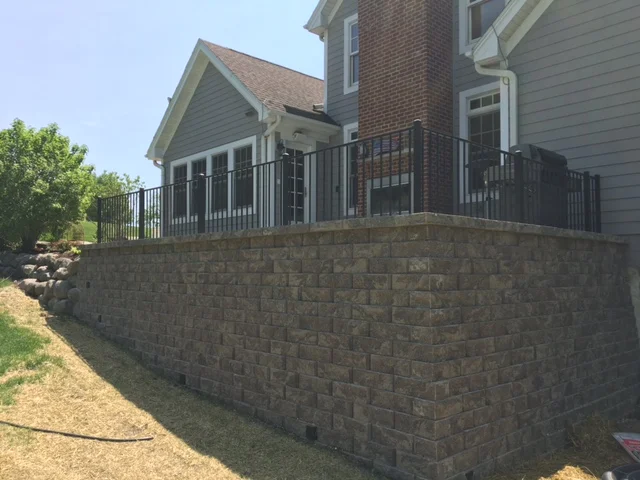
Mistake #1: Poor Site Assessment — Ignoring Sun, Wind, and Grade
The most expensive outdoor design mistake is also the most common: designing a space without first understanding how the site actually behaves.
A patio facing due west in Wisconsin is comfortable in spring and fall, but brutal on a July afternoon. A pergola built without accounting for prevailing southwest winds becomes unusable in summer. A patio installed in a natural low point collects water every time it rains.
Before any design decisions are made, we assess:
- Sun angle throughout the day and across seasons
- Prevailing wind direction and intensity
- Natural water flow and drainage patterns on the property
- Grade changes that affect usability and installation approach
- Soil conditions that determine what structures the site can support
A space that "feels right" on paper but fights the site's natural conditions will always disappoint in use — and may cost significantly more to maintain or repair.
Mistake #2: Underestimating Maintenance Requirements
Homeowners frequently fall in love with a material or planting during the design phase — only to discover the ongoing maintenance requirement after installation.
Common maintenance surprises:
- Natural stone: Requires annual sealing in Wisconsin to prevent spalling and staining
- Stamped concrete: Needs resealing every 2–3 years; cracks are difficult to repair invisibly
- Wood decking: Requires staining or sealing every 1–2 years to maintain appearance and prevent rot
- Annual flower beds: Beautiful in season, but require replanting, watering, and fertilizing every year
- Water features: Pumps, filters, and winterization add to the annual maintenance calendar
None of this makes these materials wrong choices — but your design should match your actual maintenance tolerance, not your idealized version of how much time you'll have.
Mistake #3: Choosing Style Over Functionality
We've seen homeowners invest in stunning outdoor spaces that they rarely use because the design didn't account for how they actually live. The Pinterest-perfect backyard that's gorgeous in photos but awkward in practice.
Signs a design is style-over-function:
- A patio too small to comfortably fit a table and chairs for the family
- Steps with riser heights that feel wrong underfoot (standard is 7 inches; most people notice when it's off)
- A fire pit positioned so smoke blows toward the seating area in prevailing wind
- Beautiful plants that block sight lines from the house or crowd each other within 3 years
- Outdoor lighting that looks nice off but creates harsh glare when switched on
The best outdoor spaces are designed around how you live, entertain, and relax — and then made beautiful. Not the other way around.
Mistake #4: Forgetting Proper Drainage
In SE Wisconsin, drainage isn't optional. Between spring snowmelt, summer thunderstorms, and the clay-heavy soils common in our region, water management is one of the most important aspects of any landscape design.
Drainage mistakes are expensive to fix after the fact — sometimes requiring full patio removal and reinstallation. Common issues we see:
- Flat or back-pitched surfaces: Water pools on the patio or flows toward the foundation instead of away from it
- No channel drains: Low-lying areas between structures need integrated drainage or they collect water seasonally
- Improperly addressed downspouts: Extending or redirecting downspouts is often overlooked in landscape redesigns; the result is erosion and flooding in specific zones
- French drain omission: Properties with significant grade and water movement issues often need sub-surface drainage that homeowners don't anticipate
Every patio we install is graded for positive drainage — 1/8 to 1/4 inch per foot away from structures. And if we see drainage issues on the site that go beyond the immediate project scope, we say so.
Mistake #5: Inconsistent Design Vision
The patchwork outdoor space is more common than you'd think: a patio installed 10 years ago in one style, a pergola added later in a different material and scale, plants added over time with no cohesive color palette or structure.
The result looks busy and unresolved — even when each individual element is attractive on its own.
Cohesion in outdoor design comes from:
- Consistent material palette: 2–3 materials that complement each other, used throughout the space
- Scale and proportion: Structures, plantings, and hardscape that relate to each other and to the house
- Color discipline: A limited, intentional color range in both hardscape and plantings
- Defined edges: Clear transitions between lawn, planting beds, and hardscape areas
If you're planning to phase a project over multiple years, design the whole thing first — then build in stages. That's how you get a unified result rather than a collection of disconnected improvements.
How We Prevent These Mistakes
Our site visit and consultation process is designed specifically to surface these issues before a single shovel hits the ground. We ask about sun and wind, we look at drainage, we talk about how you'll actually use the space, and we recommend materials that match your maintenance reality.
We've corrected all five of these mistakes on projects throughout SE Wisconsin — and we'd rather help you avoid them entirely. See some examples of our completed projects in our project gallery, or read about our design process in detail.